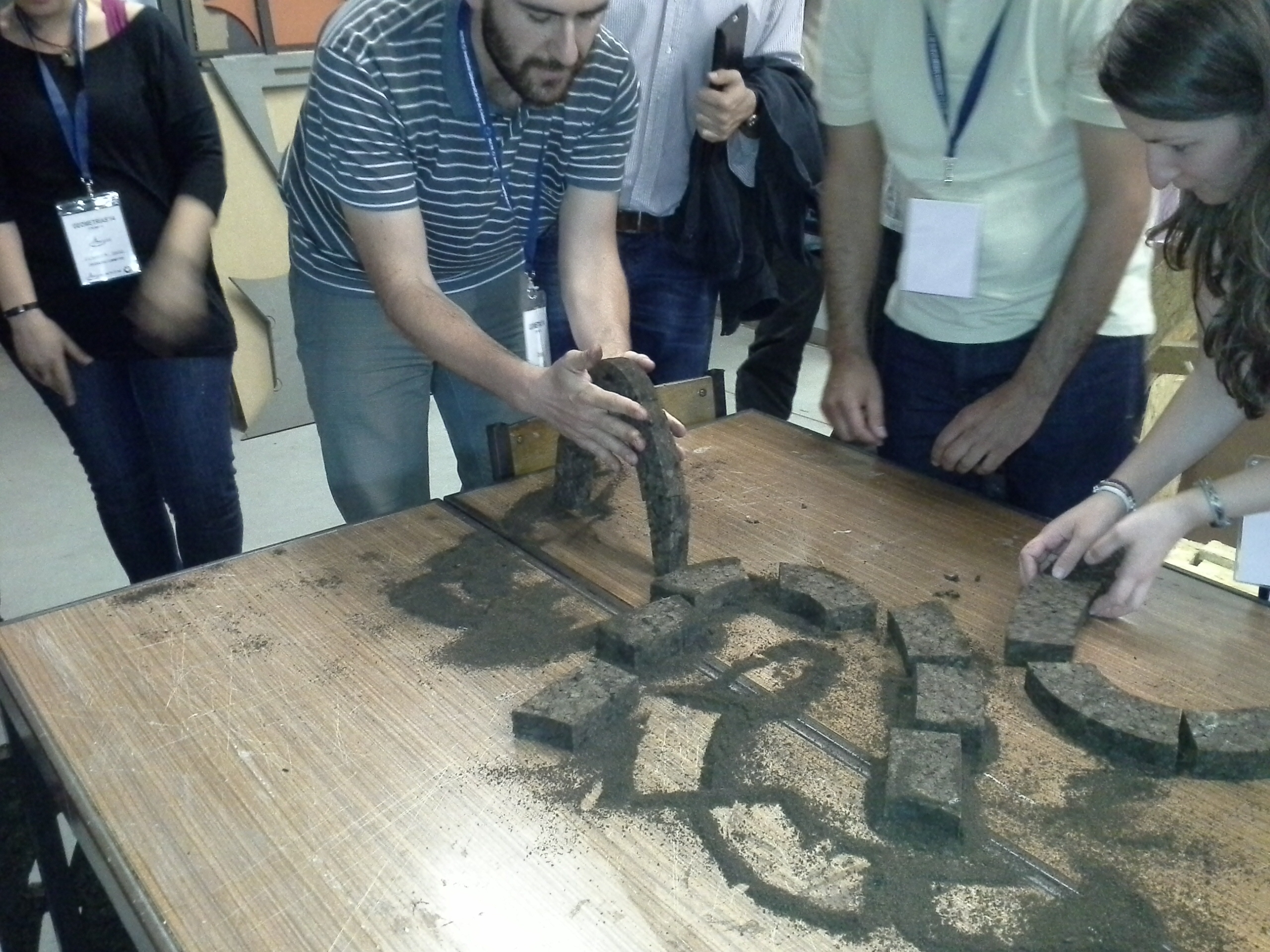
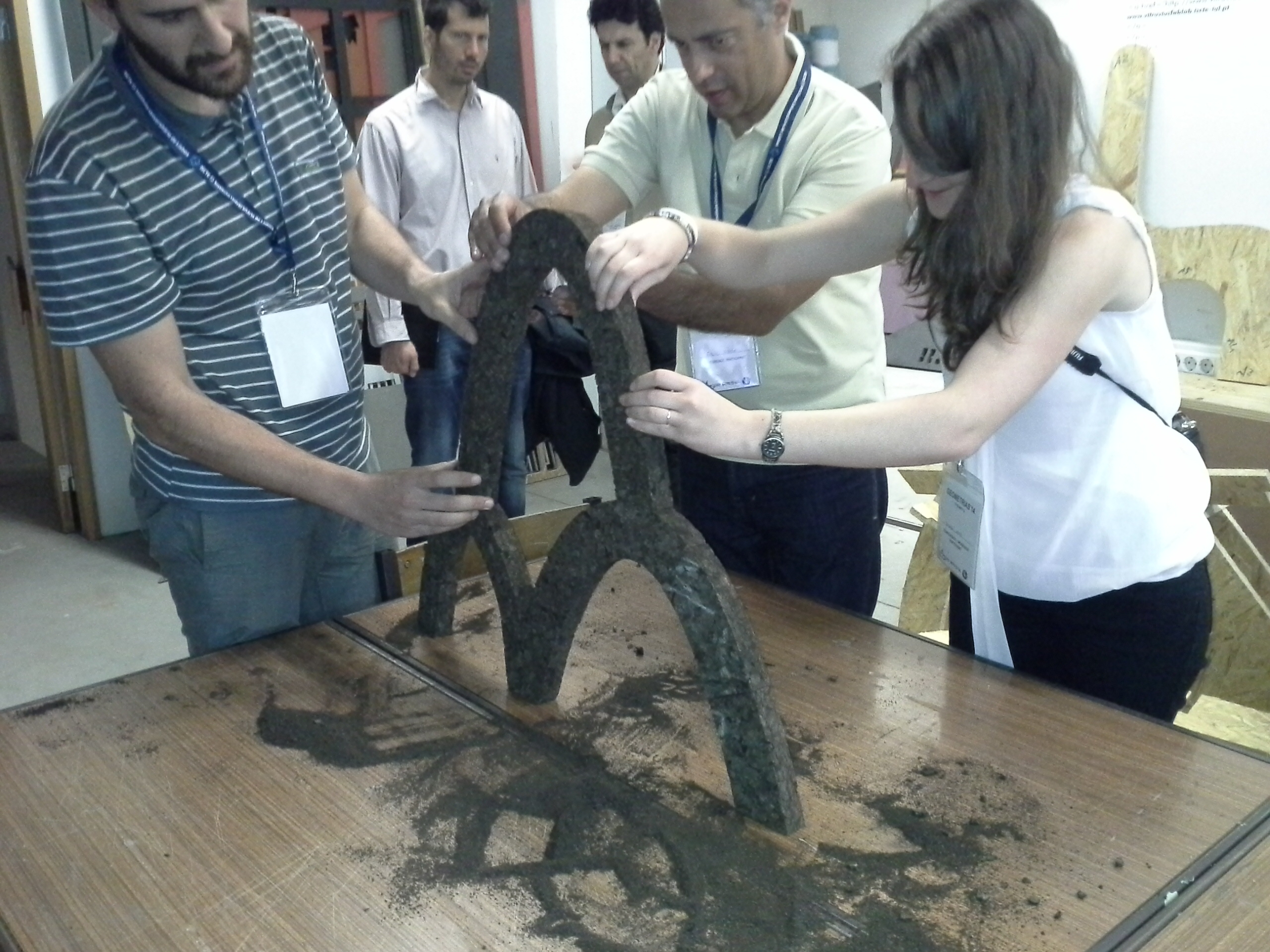
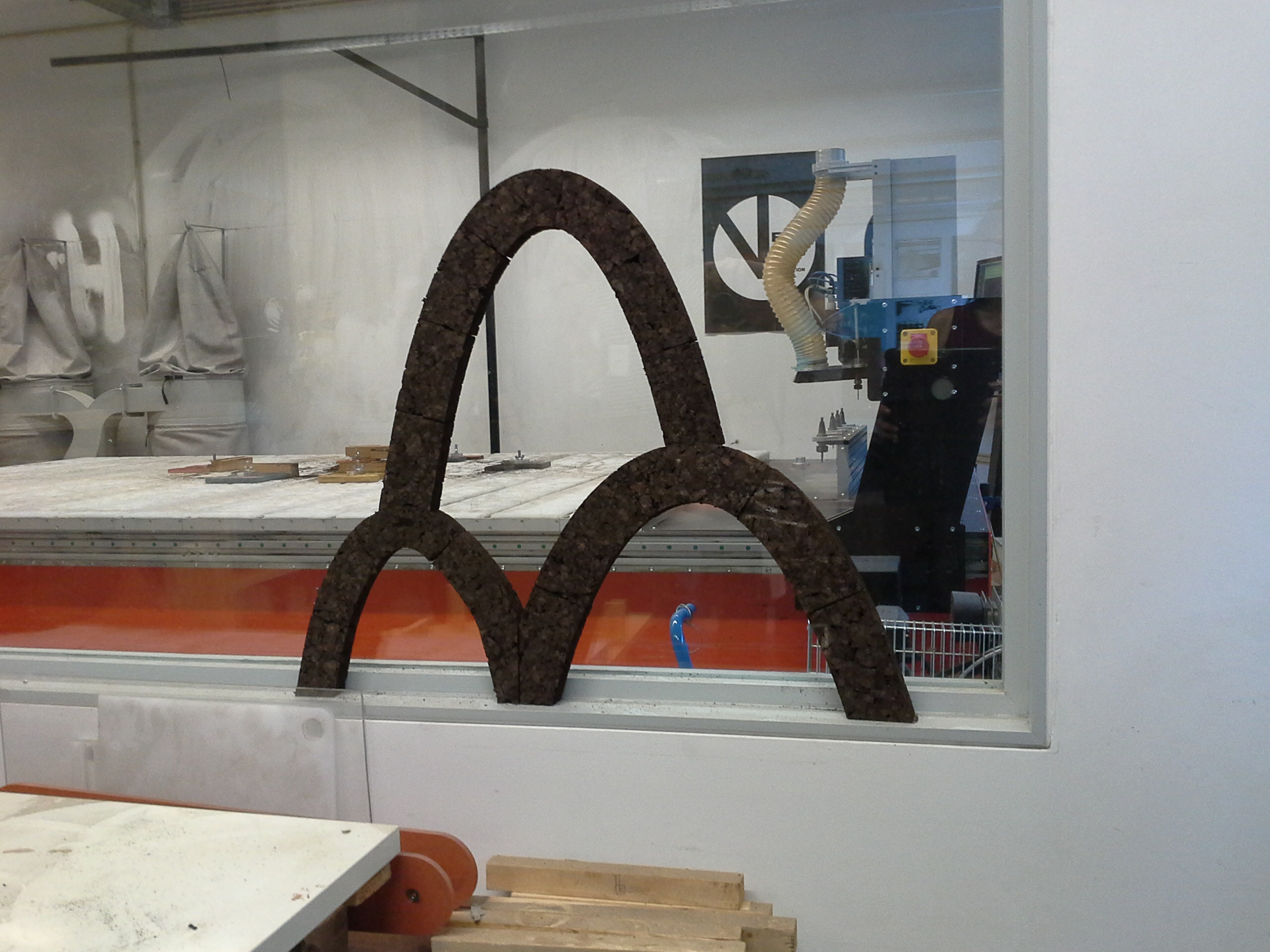
Presentation in the Digital Darq event. Showcase of personal research on cork stereotomies.
We live today in a world with extreme energetical and environmental challenges. Recognizing the irresponsible usage of reinforced concrete is one of the first steps to solving this problem, and tackling alternative solutions is the second. Here, we propose structural stone slabs. This functional model is a prototype for a (re)new(ed) kind of slab. Taking […]
Recent developments in digital design and fabrication tools have led architects and researchers to renew the interest in stereotomy. This interest converges with a growing ecological and economical conscience that matches classic stereotomy raw material needs: compression resistance materials. However, material resources or prefabrication time are still major counterparts for the adoption of this construction […]
In June 2020 I defended my PhD thesis entitled “Reconstruction of a Stereotomy – for a multi-semantic stereotomic approach”. The PDF document has Open Access and can be download in Universidade do Porto website here. https://sigarra.up.pt/faup/pt/NOTICIAS_GERAL.VER_NOTICIA?p_nr=69842 Abstract: Stereotomy is the classic body of knowledge which deals with stonecutting for building arch like structures. The interest […]
The School of Architecture of Aarhus organizes the HARD CO(u)R(s)E DIGITAL, a set of workshops focused in digital technologies in a pre-holiday format. The key factors in the CorkVault workshop were the use of ICB (Insulation Cork Board), a 5-axis waterjet cutter and Kangaroo along with Grasshopper, so that a full-scale pavillion could be built. […]
This paper focuses on the development of a BIM (Building Information Modeling) tool for stereotomic design, aiming to create a bridge between academic research and practical implementation of stereotomy in the construction sector. The creation of a stereotomic BIM tool enhances the use of compressive materials within funicular shapes to minimize reliance on carbon-intensive steel-reinforced […]
I was asked to teach the fundamentals of Grasshopper, so I developed an 8 hour crash course in which I taught the fundamentals of parametric design along with the Grasshopper flow paradigm. The themes rangd from the basic variable radius with slider to an example of genetic algorithmic optimization with Galapagos. Lectured in February 2013
A reusable mold methodology to the production of customized voussoirs using HoloLens Mass customizing of building components allows new conditions to explore aesthetic and sustainability in architecture. However, such possibilities tend to require the use of expensive and heavy digital fabrication machinery, which is mostly available in the most regions on the planet. In this […]
This arch was built in the DFL to showcase the possibilities of 3D printed customized joints. 144 joints were modelled automatically with a custom crafted algorithm and printed on site. The metal plates were laser cut. This work was developed together with Prof. Dr. José Pedro Sousa and João Carvalho. It is feature in this […]
An experiment within the DFL. Project coordination: José Pedro Sousa Design team: Pedro de Azambuja Varela, Pedro Martins Photographs: Carlos de Albuquerque Castro
All content © Copyright 2026 by Pedro de Azambuja Varela.
Subscribe to RSS Feed